
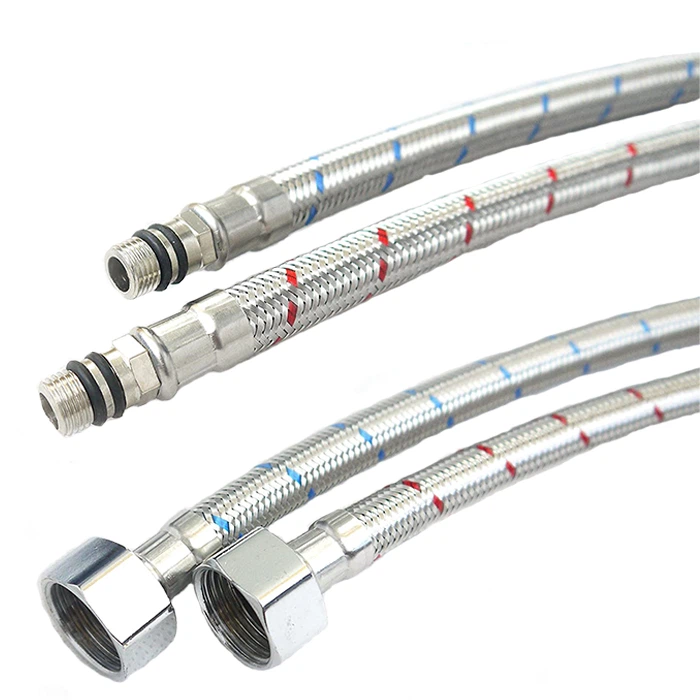
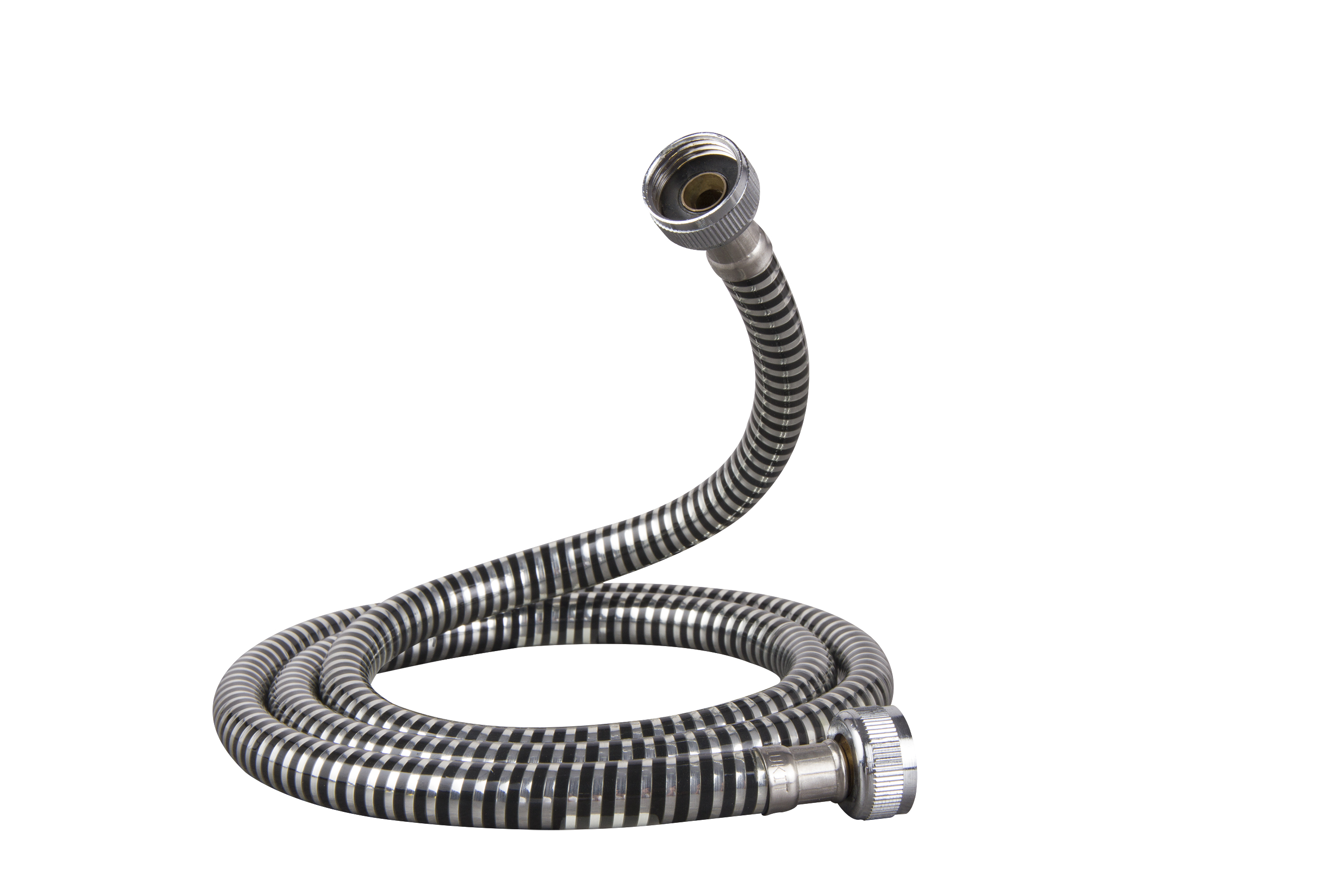
What is a high pressure braided hose PTFE?
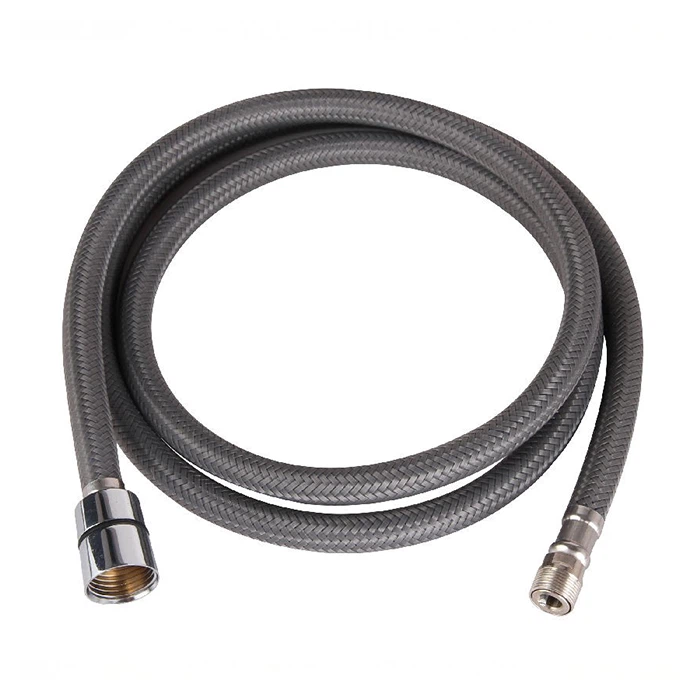
Polytetrafluoroethylene (PTFE) is a polymer material with unique properties and many applications. As a special piping material, high-pressure braided hose PTFE occupies a pivotal position in the industrial field because of its characteristics of corrosion resistance, high-temperature resistance, and pressure resistance. This article will introduce in detail the material properties, production process, application areas, and advantages and limitations of high-pressure braided hose PTFE.
I. Material properties
PTFE, known as polytetrafluoroethylene, is a highly chemically stable, high temperature-resistant, wear-resistant polymer material. It has the following significant features:
Strong corrosion resistance: PTFE is virtually impervious to any chemicals, including strong acids (such as aqua regia, and hydrofluoric acid), strong bases, organic solvents, etc. This means that PTFE hose can be used to transport a variety of corrosive media, such as acid, alkali, salt, etc.
Good high-temperature resistance: PTFE can work normally in an extremely wide temperature range, its high-temperature resistance can reach -80℃ to +260℃. Even under extreme conditions, it can remain stable without embrittlement or aging.
Good self-lubrication: PTFE has a very low friction factor and is a good friction-reducing and self-lubricating material. This makes the PTFE hose can still maintain good fluidity under high-pressure working conditions.
Excellent flexibility: PTFE hose has high flexibility and can be bent, twisted and other complex working conditions to maintain good performance.
Excellent electrical insulation performance: PTFE is a non-polar material, with great resistance, and low dielectric constant, so it is an excellent electrical insulation material.
II. The production process
The production process of PTFE high-pressure braided hose mainly includes the following steps:
- Preparation of raw materials: select high-quality PTFE powder to ensure its high purity and uniform particle size distribution. According to the need to add the appropriate amount of filler, such as glass fiber, carbon fiber, etc., to improve the mechanical properties of the tube and temperature resistance. Select the binder with good compatibility with PTFE powder and moderate curing temperature.
- Mixing and molding: Mix PTFE powder, filler, and binder according to a certain proportion. Put the mixed materials into the mold of tube embryo, and make it shape by heating and pressure. After the tube embryo cools down, take it out from the mold.
- Surface treatment: The surface of the embryo is polished to remove burrs and uneven parts and improve the surface finish. The preform is cleaned with organic solvents to remove impurities and oils from the surface.
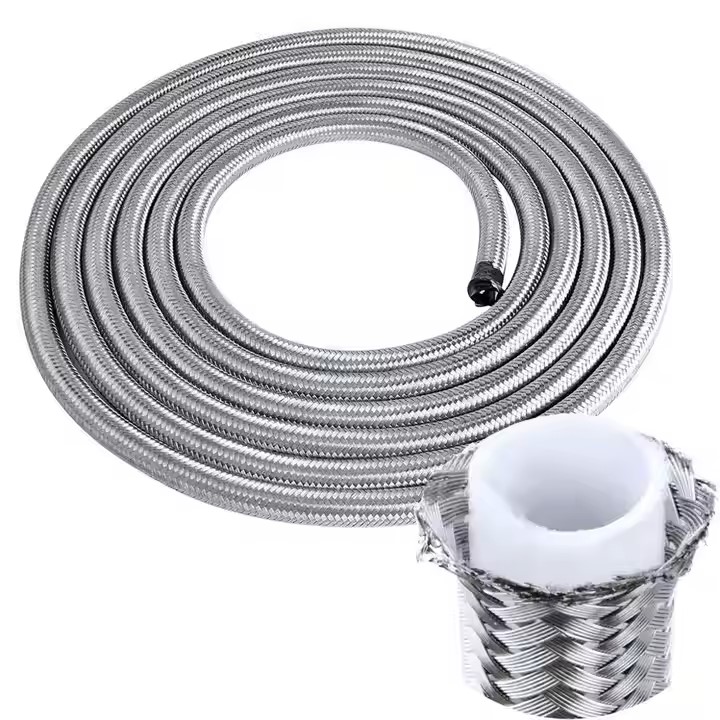
- Weaving and sintering: Weave high-strength fibers on the surface of the pipe blank to increase the pressure resistance of the pipe. The treated pipe embryo is put into the sintering furnace and sintered at a certain temperature to rearrange the PTFE molecules and fuse the filler and PTFE material. After the sintering is completed, the tubes are slowly cooled to room temperature.
- Quality Inspection and Cutting: The finished tubes are inspected for appearance, size, pressure resistance, etc. to ensure that the product quality meets the requirements. Cut the sintered tubes into different lengths as required.
III. The application field
High-pressure braided hose PTFE is widely used in many fields because of its unique performance:
- Chemical industry: It is suitable for conveying various corrosive media, such as acid, alkali, and salt. Its high-pressure and corrosion-resistant properties are given full play in chemical reaction devices.
- Oil and gas industry: it is used for conveying high-pressure media, such as oil, liquid petroleum gas, etc.. Its excellent high pressure and corrosion resistance make it ideal for oil and gas pipelines.
- Solar cell industry: It has a wide range of applications in the solar cell industry. It is resistant to a wide range of chemicals, including strong acids, strong bases, and organic solvents. These chemicals are commonly used to prepare electrolytes in battery manufacturing. High-pressure braided hose PTFE ensures that these chemicals do not react with the pipe during transportation, maintaining their purity and performance.
- Pharmaceutical and food industry: In line with the hygiene standards of the pharmaceutical and food industry, PTFE hoses can be used to convey high-pressure liquids such as medicines, beverages, and food products to ensure the safety and purity of the products.
IV. Advantages and limitations
Advantages:
- Chemical resistance: It can resist the erosion of almost all chemicals and is suitable for conveying corrosive media.
- Resistant to high temperature and high pressure: able to work normally in high temperature and high-pressure environments, ensuring the safe transportation of media.
- Good flexibility: has good flexibility, and can adapt to a variety of complex process layouts and installation environments.
- Easy to install and maintain: connected with quick-fit fittings, easy and quick installation, and good sealing performance, effectively preventing media leakage.
Limitations:
- Lower mechanical strength: compared with metal hose, high-pressure braided hose PTFE is weaker in withstanding high pressure and external force.
- Poor thermal conductivity: This can affect application scenarios that require good heat transfer.
- Higher cost: compared to regular plastic or metal hoses.
- Difficulty in connection: due to material properties, the PTFE hose is more complicated to weld and connect.
High-pressure braided hose PTFE occupies a very important position in the industrial field under its corrosion resistance, high-temperature resistance, and pressure resistance. However, its mechanical strength, thermal conductivity, cost and connection difficulty, and other limitations also need to be considered in the application. With the continuous progress of science and technology and the continuous development of the industrial field, high-pressure braided hose PTFE will be used and promoted in more fields.